


Coaching over control: Why empowering leaders outperform micromanagers
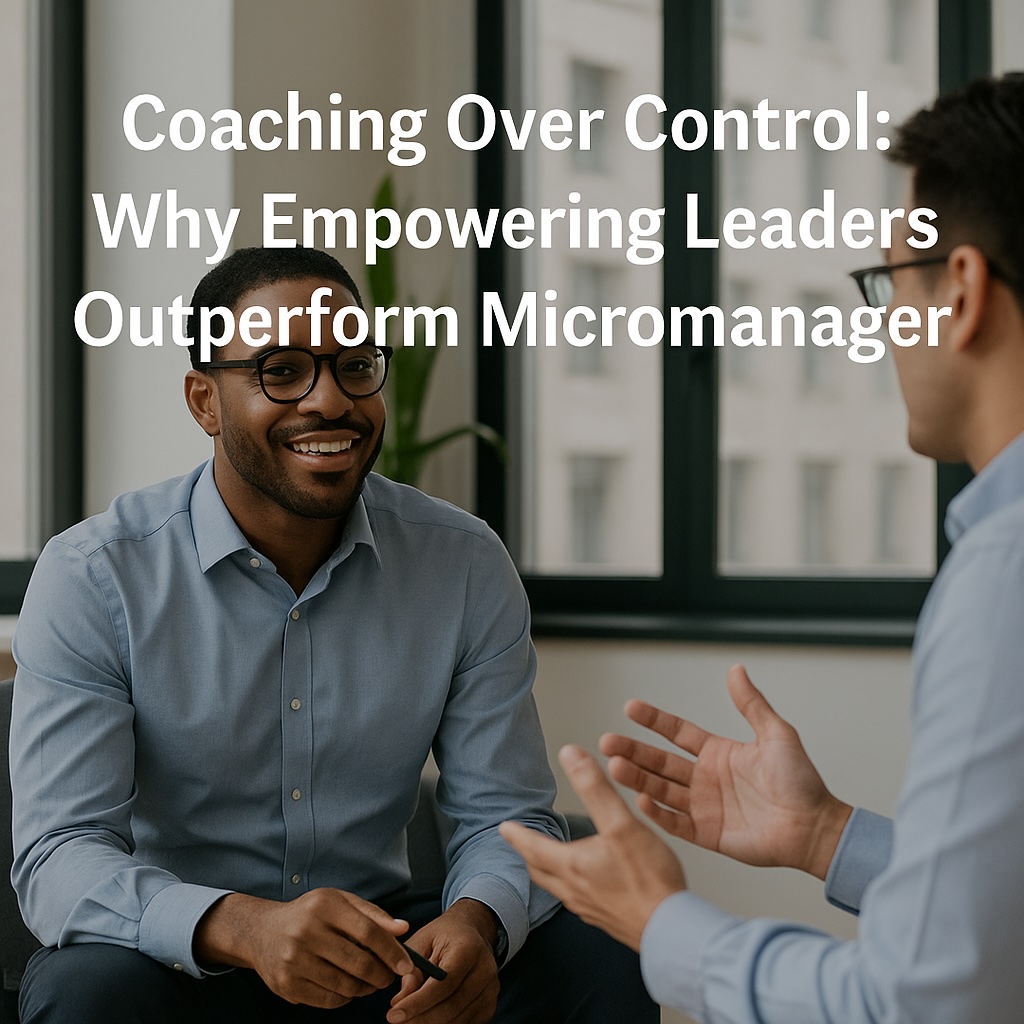
Micromanagement might feel like certainty – but it delivers the opposite.
The Global Leadership Forecast 2025 reveals a key shift: the most effective leaders today are those who empower, not those who oversee every detail.
And yet, in high-pressure environments – especially in hybrid or fast-scaling teams – leaders often default to control. Why? Because control feels safer. But it’s also slower, smaller, and less sustainable.
What truly drives performance today?
Coaching.
The difference between managing and empowering
Micromanagers often believe they’re being helpful.
They check in frequently. They “double-check” work. They provide “clarity.”
But what they’re really doing is creating dependency – and often, quietly eroding confidence.
Coaching-style leaders do something different:
– They ask more than they tell
– They guide rather than dictate
– They focus on growing capacity, not proving control
– They hold space for autonomy, reflection, and learning
It’s not about stepping back – it’s about stepping beside your team, and walking with them through decisions rather than dragging them to a conclusion.
Why coaching matters more than ever
In today’s landscape, coaching isn’t a nice-to-have – it’s a strategic advantage.
Here’s why:
– Remote and hybrid teams need autonomy and trust to thrive
– Complex, cross-functional work requires critical thinking at every level
– Burnout rises when employees feel watched, not supported
– AI and automation make transactional leadership obsolete – human-centered coaching fills the gap
The Forecast points to a key leadership need: shifting from directive to developmental mindsets. Coaching accelerates that shift – because it encourages ownership, experimentation, and learning from within.
Communication: The engine of coaching
Coaching isn’t just a mindset – it’s a communication practice.
Empowering leaders:
– Ask open-ended questions that encourage reflection
– Listen actively without rushing to fix
– Clarify expectations while leaving room for autonomy
– Give feedback that builds, not breaks
– Celebrate progress—not just perfection
And perhaps most importantly, they communicate with one goal in mind: developing others, not proving themselves.
Are you holding your team accountable – or holding them back?
